Don’t Let Small RV Problems Turn Into Big Vacation Repairs
May 12, 2026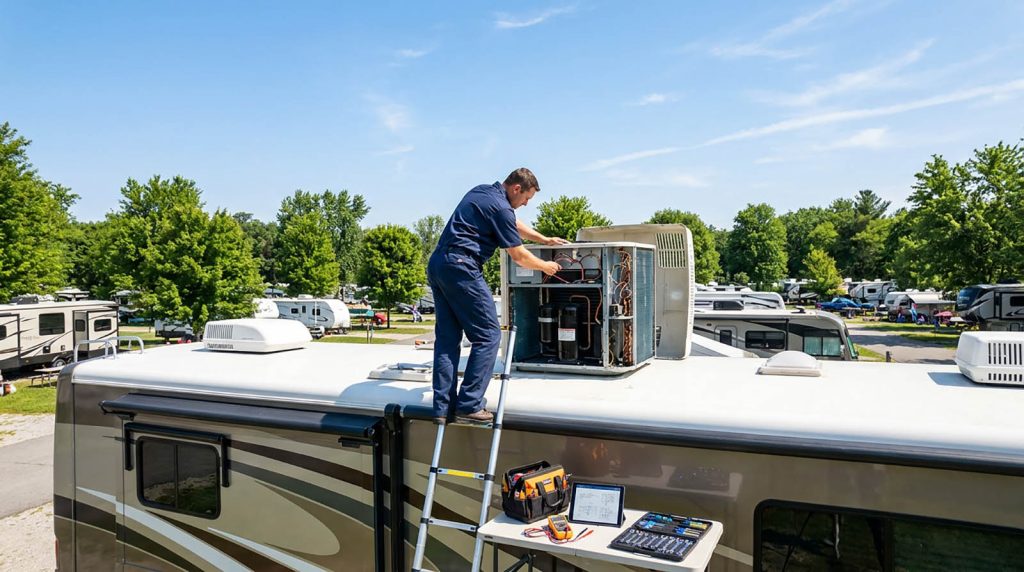
It’s a hot June afternoon. The campground is beautiful, the grill is warming up, and everyone is ready to relax. Inside your RV, however, it still feels uncomfortably warm—even though the air conditioner has been running for the last hour.
If that situation sounds familiar, you’re not alone.
Every summer, RV owners throughout Florida and New England experience air conditioners that simply can’t keep up with rising temperatures. Sometimes the issue is minor. Other times it’s an indication that your RV’s cooling system needs professional attention before a small problem becomes a much larger repair.
The good news is that many air conditioning issues can be diagnosed and repaired by a mobile RV technician without requiring you to move your RV from its campsite.
When “Running” Doesn’t Mean “Cooling”
One of the most common complaints RV owners have is that the rooftop air conditioner appears to be operating normally, but the inside of the RV never reaches a comfortable temperature.
The fan may be running.
You can hear the unit operating.
Air is coming through the ceiling vents.
But the RV still feels warmer than it should.
That doesn’t necessarily mean you need a new air conditioner. Several different issues can reduce cooling performance, and accurately diagnosing the cause is the first step toward the right repair.
Signs Your RV Air Conditioner May Need Service
- The RV never reaches the thermostat setting.
- The air conditioner runs almost constantly.
- Cooling seems weaker than it was last season.
- Airflow from the ceiling vents feels reduced.
- The unit cycles on and off unexpectedly.
- The air conditioner makes new or unusual noises.
- The breaker trips while the air conditioner is operating.
If you’ve noticed one or more of these symptoms, scheduling service before your next trip can often prevent more extensive repairs later.
Summer Places Extra Demands on Your RV
Even a properly functioning RV air conditioner has limits.
High humidity, direct afternoon sun, larger RV interiors, frequent door openings, and extremely hot weather all increase the workload placed on rooftop cooling systems.
For Florida RV owners, air conditioners often operate for months with very little downtime.
In New England, many air conditioners sit unused throughout the winter before being asked to perform during the first hot camping weekends of the year.
Both situations can reveal problems that weren’t obvious during cooler weather.
Why Professional Diagnosis Matters
Many cooling problems produce similar symptoms.
What appears to be an air conditioner problem could actually involve electrical components, thermostats, control systems, power supply issues, or other related equipment.
Replacing parts without confirming the underlying cause often results in unnecessary expense while the original problem remains.
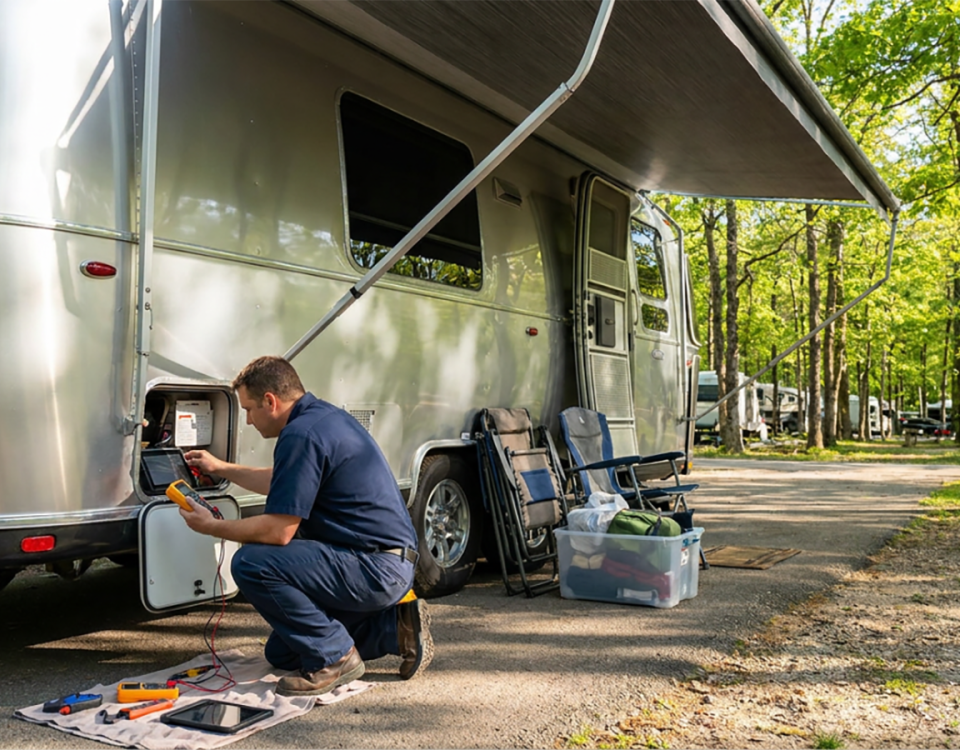
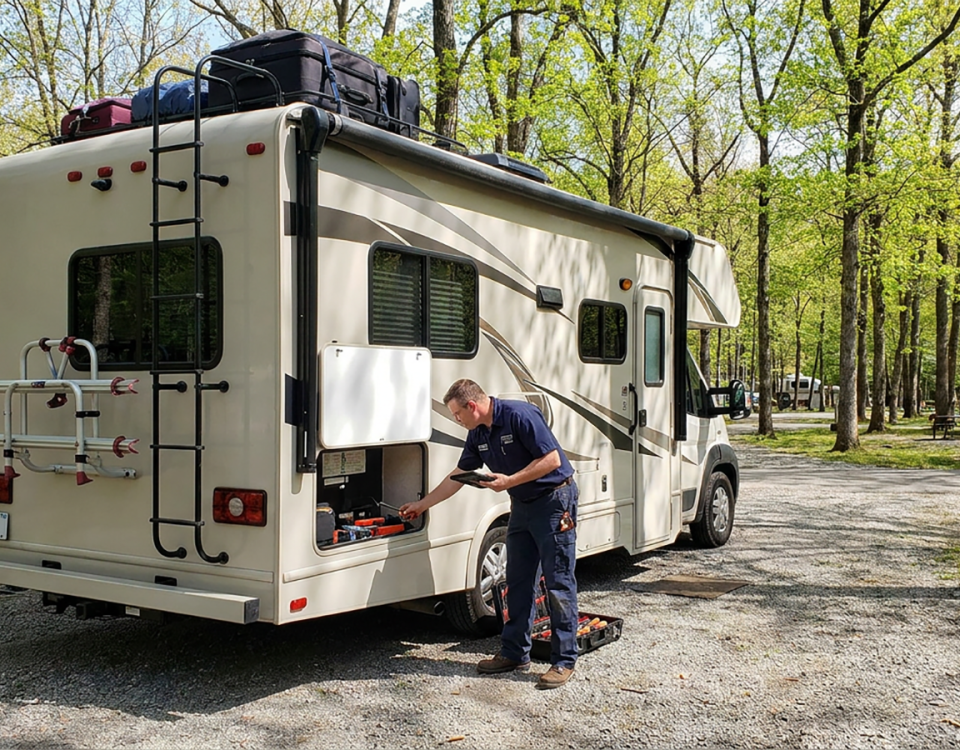
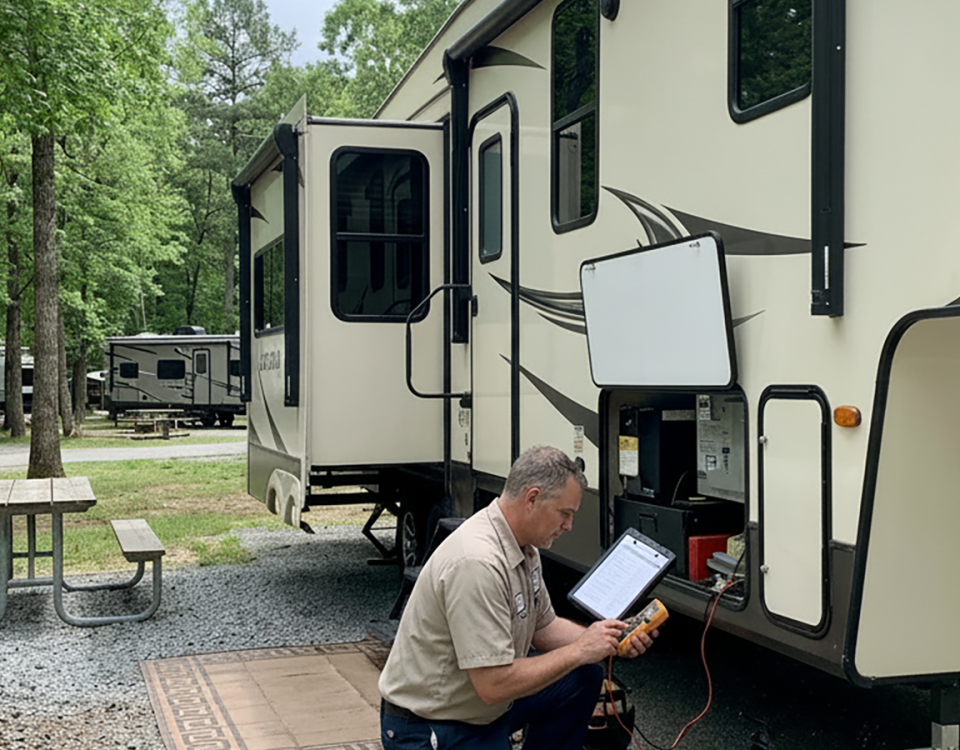
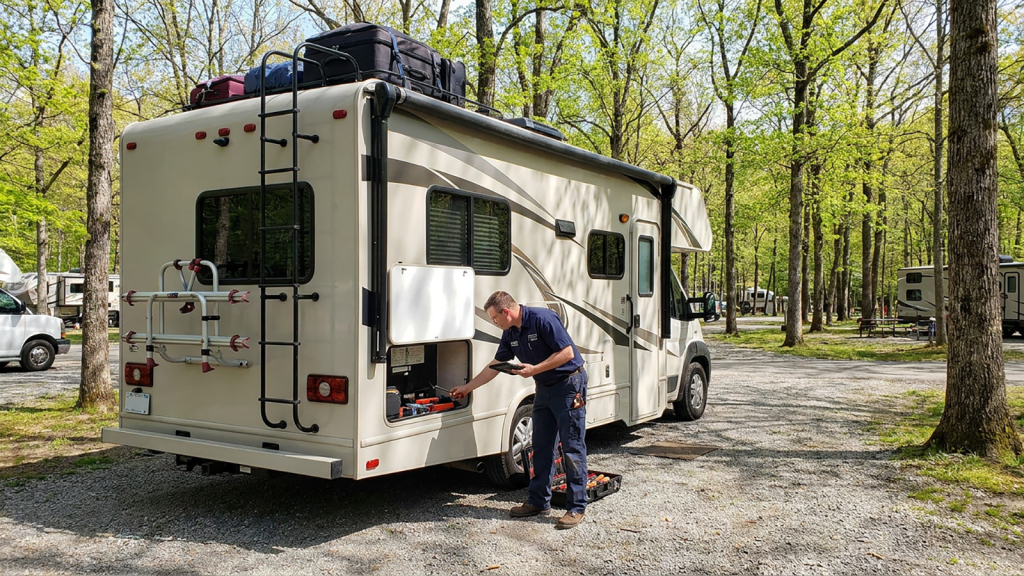
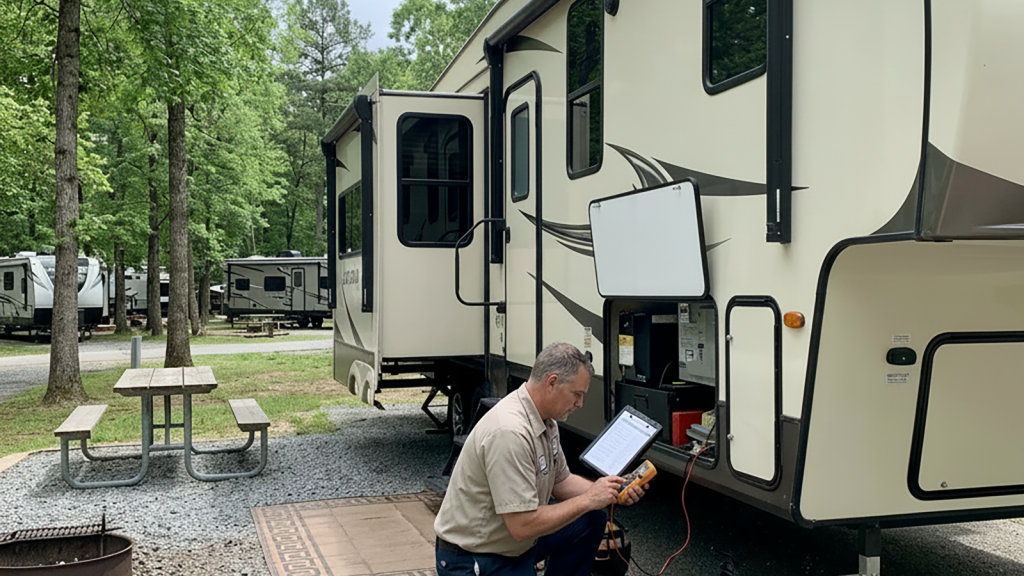
Open Road RV Repair provides mobile RV air conditioner diagnostics and repair throughout our service area. Our technicians diagnose the problem first, helping ensure repairs are focused on the actual issue.
The Convenience of Mobile RV AC Repair
One of the biggest advantages of mobile RV service is convenience.
Instead of disconnecting your campsite, transporting your RV to a repair facility, and waiting for service, many air conditioning problems can be diagnosed where your RV is already parked.
Whether you’re staying at a campground, RV park, seasonal site, or private property, mobile service helps minimize interruptions to your travel plans.
Learn more about our complete mobile RV repair services and the areas we serve throughout Florida and New England.
Don’t Wait Until the Hottest Weekend of the Summer
Minor cooling issues often become much more noticeable during holiday weekends and extended summer trips when temperatures are at their highest.
If your RV air conditioner has been struggling, now is the ideal time to have it evaluated before your next adventure.
Addressing a developing problem early can help reduce unexpected interruptions, improve comfort, and give you greater confidence every time you head to the campground.
Helpful Summer Travel Resources
Extreme heat can affect both RV systems and personal safety while traveling. The National Weather Service Heat Safety page provides tips for staying safe during periods of excessive heat.
The U.S. Department of Energy Energy Saver program also offers general information about cooling efficiency and energy use.
Before traveling, it’s also wise to review local weather forecasts and heat advisories through the National Weather Service.
Frequently Asked Questions
Why is my RV air conditioner running but not cooling?
Reduced cooling can be caused by several different issues, including airflow restrictions, electrical problems, thermostats, worn components, or other mechanical concerns. Professional diagnosis helps identify the actual cause.
Can mobile RV repair diagnose rooftop air conditioner problems?
Yes. Open Road RV Repair provides mobile diagnostics and repairs for many rooftop air conditioner problems at campgrounds, RV parks, storage facilities, and private property.
Should I replace or repair my RV air conditioner?
That depends on the condition of the unit, the type of problem, available replacement parts, and the overall age of the system. A professional inspection can help determine the most practical solution.
Does extremely hot weather affect RV air conditioners?
Yes. High temperatures, humidity, direct sunlight, and heavy usage all increase the workload placed on rooftop air conditioning systems.
How do I schedule mobile RV AC service?
You can contact Open Road RV Repair to schedule mobile RV air conditioner diagnostics or repair at your location within our service area.
Stay Comfortable All Summer Long
If your RV air conditioner isn’t keeping up with the heat, don’t wait until your next camping trip is interrupted. Open Road RV Repair provides professional mobile RV air conditioner diagnostics and repair throughout Florida and New England.
Contact Open Road RV Repair today to schedule your mobile RV AC service.