Is Your RV Ready for Another Season of Adventure?
February 17, 2026
Why a Pre-Trip RV Inspection Can Save Your Vacation
April 14, 2026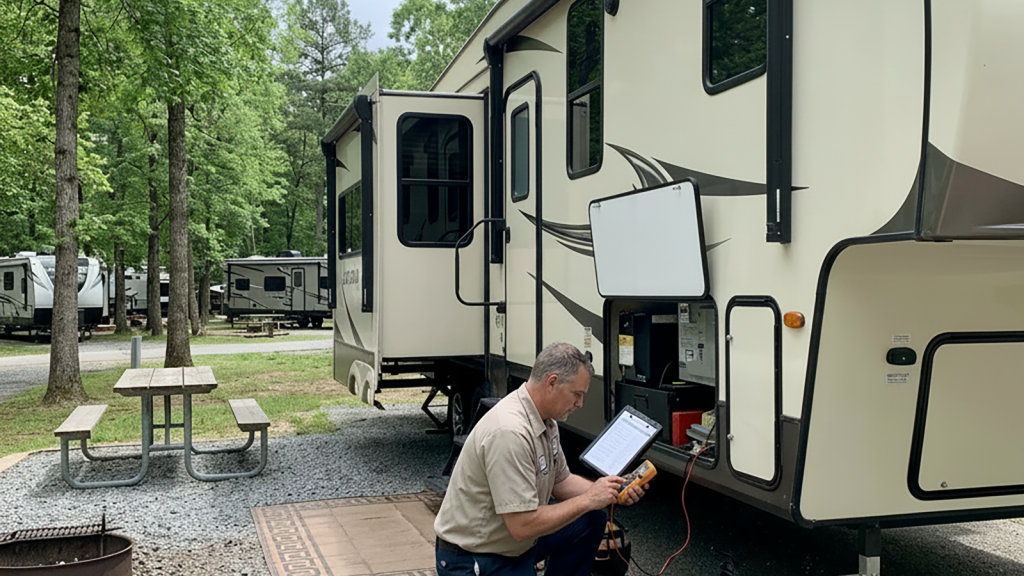
Every RV travel season begins a little differently.
For an RV owner in New England, March may mean looking ahead to warmer weather and getting a rig ready to come out of winter storage. For a snowbird in Florida, it may mean preparing for the long drive back north after several months of active use.
Those situations may seem very different, but they often reveal many of the same RV problems.
At Open Road RV Repair, we regularly see issues that develop during storage, heavy seasonal use, long-distance travel, or simply from normal wear and exposure. Catching them before departure can mean the difference between handling a repair while the RV is comfortably parked and dealing with a breakdown miles from where you planned to be.
Here are 10 common RV problems worth paying attention to before your next major travel season.
1. Roof Sealant That Has Started to Crack or Separate
An RV roof is constantly exposed to sunlight, rain, temperature changes, vibration, tree debris, and movement while traveling. Over time, sealant around vents, antennas, skylights, air conditioners, and other roof penetrations can begin to crack or pull away.
A small opening may not look serious, but water intrusion can eventually damage ceilings, insulation, walls, cabinetry, and structural materials.
Signs of a possible roof problem can include discoloration, moisture, soft areas, or visible sealant deterioration. Open Road RV Repair provides mobile RV roof leak troubleshooting and resealing when roof concerns need professional attention.
2. Batteries That No Longer Hold a Charge
RV batteries can struggle after long periods of storage, periods of heavy use, improper charging, or simply age.
A weakened battery may initially seem like a minor inconvenience, but RV batteries support numerous systems throughout the coach. Problems can show up as dim lights, equipment that operates inconsistently, slide-out issues, or systems that behave unpredictably.
Electrical diagnosis is especially important because what appears to be a battery problem may actually involve a charger, converter, inverter, connection, fuse, wiring issue, or another component.
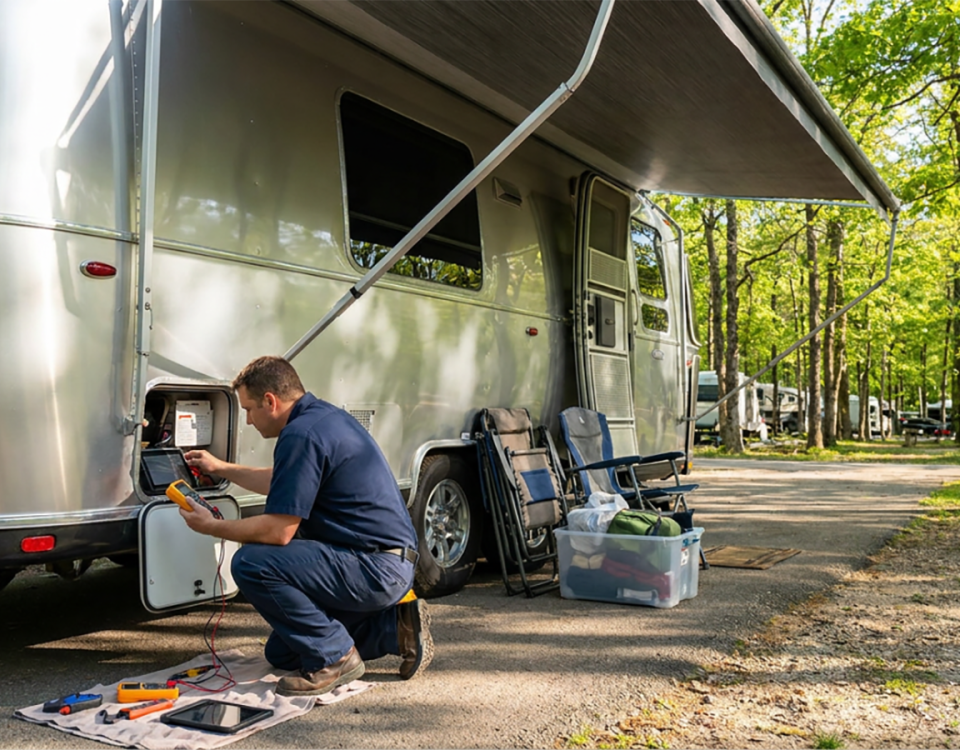
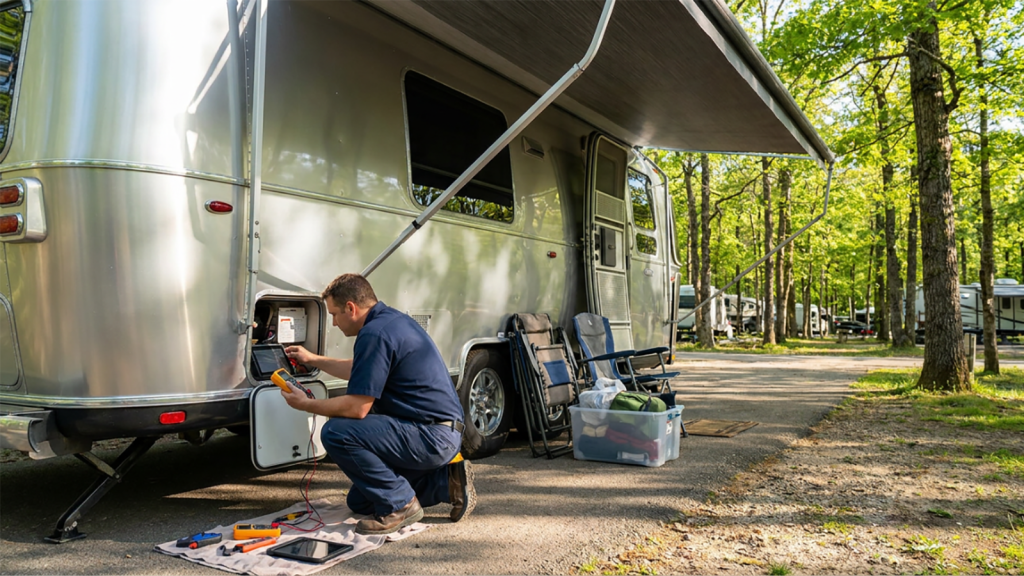
Our mobile RV electrical repair service focuses on identifying the actual source of the problem rather than simply replacing parts.
3. Air Conditioners That Run but Don’t Cool Properly
An RV air conditioner doesn’t have to stop running completely to indicate a problem.
You might notice longer cooling cycles, reduced airflow, unusual noises, water near the unit, or a coach that simply isn’t getting as comfortable as it used to.
In Florida, rooftop AC systems can experience months of continuous demand. In New England, an air conditioner that has been unused throughout winter may not show a problem until the first warm trip of the season.
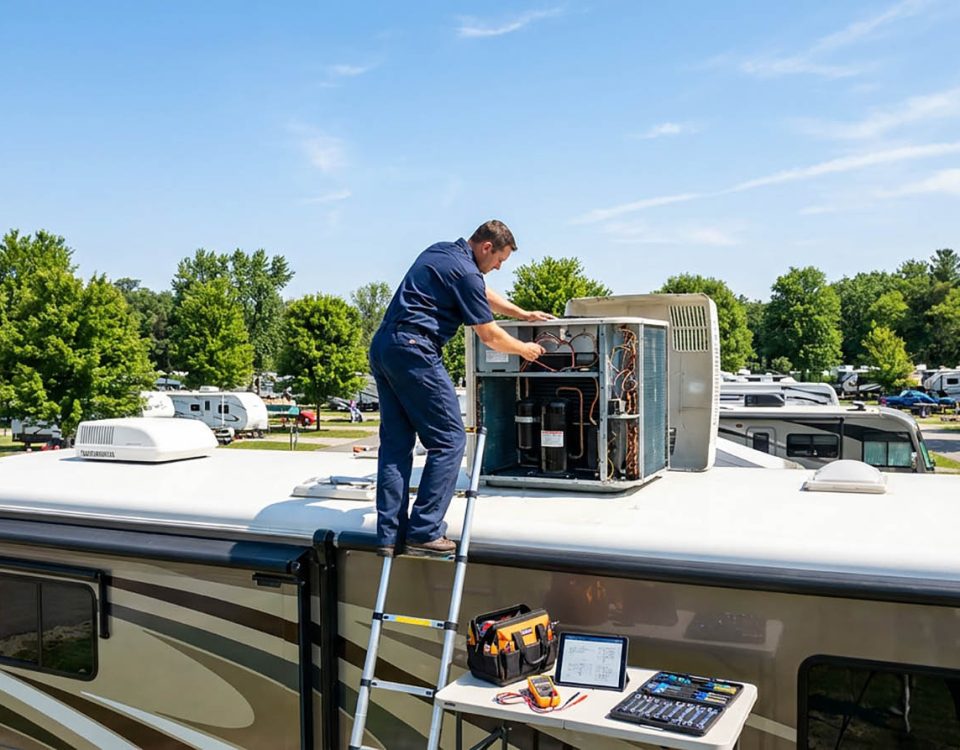
Common concerns can involve capacitors, thermostats, fan motors, airflow, drainage, electrical connections, or other components. Open Road provides mobile RV AC diagnostics and repair at the RV whenever the work can be completed safely on-site.
4. Plumbing Leaks That Only Appear Under Pressure
Some RV plumbing problems are obvious. Others don’t show themselves until the freshwater system is pressurized or the RV is connected to campground water.
Leaks can develop near fittings, faucets, toilets, water pumps, tanks, water heaters, and connections hidden inside cabinets or storage bays.
This is particularly important when bringing an RV out of winter storage. A plumbing system that was winterized correctly still needs to be returned to service carefully and checked for proper operation.
If you notice dripping, inconsistent water pressure, unexpected pump cycling, or water where it shouldn’t be, our RV plumbing and water heater service can help identify the source.
5. Water Heaters That Heat Inconsistently
A water heater may work one day and struggle the next.
Symptoms can include water that doesn’t get hot, inconsistent temperatures, ignition problems, unusual noises, leaks, or a system that repeatedly cycles.
Because RV water heaters may involve propane, electricity, control boards, sensors, wiring, valves, and plumbing connections, accurate troubleshooting matters.
Replacing a component without confirming the underlying problem can turn a relatively simple repair into an expensive guessing game.
6. Slide-Outs That Move Differently Than They Used To
RV owners get used to how their slide-outs sound and move.
If that changes, pay attention.
A slide that begins moving unevenly, making grinding or clicking noises, stopping unexpectedly, or failing to seal correctly may have a mechanical, electrical, hydraulic, alignment, gear, motor, or track-related issue.
Forcing a struggling slide-out can sometimes make the underlying problem worse.
Open Road RV Repair provides mobile RV slide-out diagnostics and repair, including evaluation of motors, tracks, gears, electrical connections, seals, and supporting components.
7. Electrical Outlets or Systems That Work Intermittently
Intermittent electrical problems are easy to postpone because everything eventually starts working again.
That’s exactly what makes them frustrating.
An outlet that loses power, a converter that behaves unpredictably, a breaker that repeatedly trips, or equipment that works only under certain conditions deserves investigation.
Electrical problems can involve shore power, breakers, fuses, wiring, batteries, converters, inverters, control boards, or individual components.
Because RVs combine both 12-volt DC and 120-volt AC systems, professional diagnosis can help isolate the problem safely and efficiently.
8. Appliances That Don’t Perform Like They Used To
Refrigerators, furnaces, water heaters, and other RV appliances often provide warning signs before they fail completely.
You may notice slower cooling, inconsistent ignition, unusual cycling, error codes, unusual noises, or performance that changes from one day to the next.
An appliance issue can sometimes originate within the appliance itself, but it can also be caused by electrical supply, propane delivery, ventilation, sensors, control boards, or other supporting systems.
Open Road’s RV repair services include diagnostics and service for major RV appliances and HVAC systems.
9. Safety Equipment That Has Been Forgotten
Smoke alarms, carbon monoxide alarms, propane detectors, fire extinguishers, emergency exits, and other safety equipment aren’t usually the first things RV owners think about before a trip.
They should still be part of seasonal preparation.
The U.S. Fire Administration recommends regular RV inspection and calls attention to propane systems, electrical use, generator exhaust, fire extinguishers, and escape routes. Its RV fire safety guidance provides useful information for owners preparing for travel.
The U.S. Consumer Product Safety Commission also provides information about carbon monoxide safety and CO alarms.
10. Problems That Were Put Off Last Season
This may be the most common problem of all.
That small leak, strange noise, occasional electrical issue, sticky slide-out, or appliance that “still mostly works” often gets pushed aside when the RV is being used.
Then the season ends, the RV goes into storage, and the problem is still waiting when the next trip arrives.
If you already know something isn’t working correctly, dealing with it before your departure date gives you more flexibility for diagnosis, parts availability, and scheduling.
Open Road RV Repair’s mobile RV repair services cover many of the systems RV owners depend on every day, including electrical, plumbing, HVAC, appliances, inspections, seasonal service, and troubleshooting.
Florida and New England RVs Need Attention for Different Reasons
An RV preparing to leave Florida after months of winter use has experienced a very different season from an RV preparing to leave winter storage in New England.
The Florida RV may have accumulated months of continuous wear on air conditioning, plumbing, appliances, electrical systems, slide-outs, and seals.
The New England RV may have spent months sitting through cold temperatures, moisture, battery storage, and changing weather conditions.
Neither automatically means something is wrong.
It simply means the right maintenance questions depend on how the RV has been used.
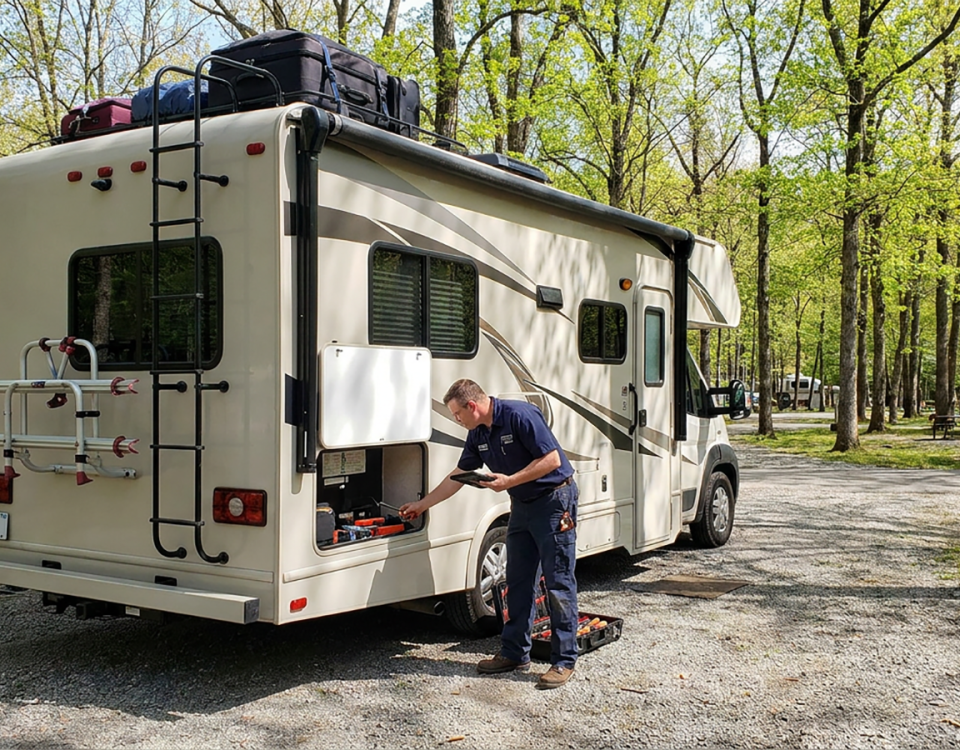
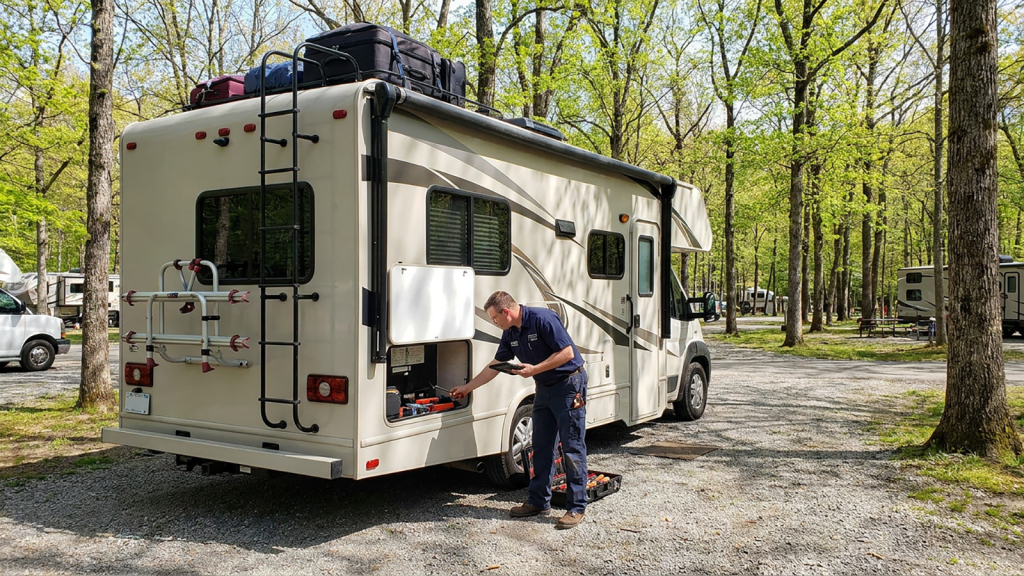
Open Road RV Repair serves RV owners throughout Central and Southern Florida and New England with mobile diagnostics and repair at campgrounds, RV parks, storage locations, and private properties. You can review our current coverage on the Open Road RV Repair service area page.
A Pre-Trip Inspection Can Help You Know What You’re Starting With
If you’re preparing for a longer trip, buying an RV, bringing one out of storage, or simply want a better understanding of its current condition, an RV inspection can provide a useful overview before you travel.
Open Road RV Repair currently offers professional RV inspections covering major systems such as appliances, generator operation, plumbing, electrical components, converters and inverters, and safety systems.
The goal isn’t to assume your RV has a problem. It’s to identify what is working correctly, what may need attention, and what you should know before relying on those systems miles from home.
Frequently Asked Questions
What are the most common RV problems before a trip?
Common concerns include battery and electrical problems, roof seal deterioration, plumbing leaks, water heater issues, air-conditioning problems, slide-out malfunctions, appliance issues, and safety equipment that needs attention.
Should I have my RV inspected after winter storage?
An inspection can be useful after extended storage, especially before a long trip. Systems that have been inactive may need to be tested and checked as the RV is returned to regular use.
Does an RV need an inspection after spending the winter in Florida?
It can be a good idea, particularly before a long trip north. Several months of regular use can place additional demand on HVAC, electrical, plumbing, appliance, slide-out, and roof systems.
Can Open Road RV Repair come to my campground?
Yes. Open Road RV Repair is a mobile-only RV repair company. Technicians travel to campgrounds, RV parks, storage facilities, and private properties when service can be completed safely and effectively on-site.
How far in advance should I schedule RV service?
Scheduling as early as possible is recommended, especially during peak seasonal travel periods. Early scheduling also provides more time if a repair requires parts or additional service.
Find the Problem Before It Finds You
Your RV doesn’t have to be perfect before every trip—but you should have confidence in the systems you’re depending on.
If something has been acting differently, you have a repair you’ve been postponing, or you’re preparing for another long travel season, Open Road RV Repair can bring professional mobile RV diagnostics and service directly to your location.
Contact Open Road RV Repair or call 1-800-708-1976 to schedule service.